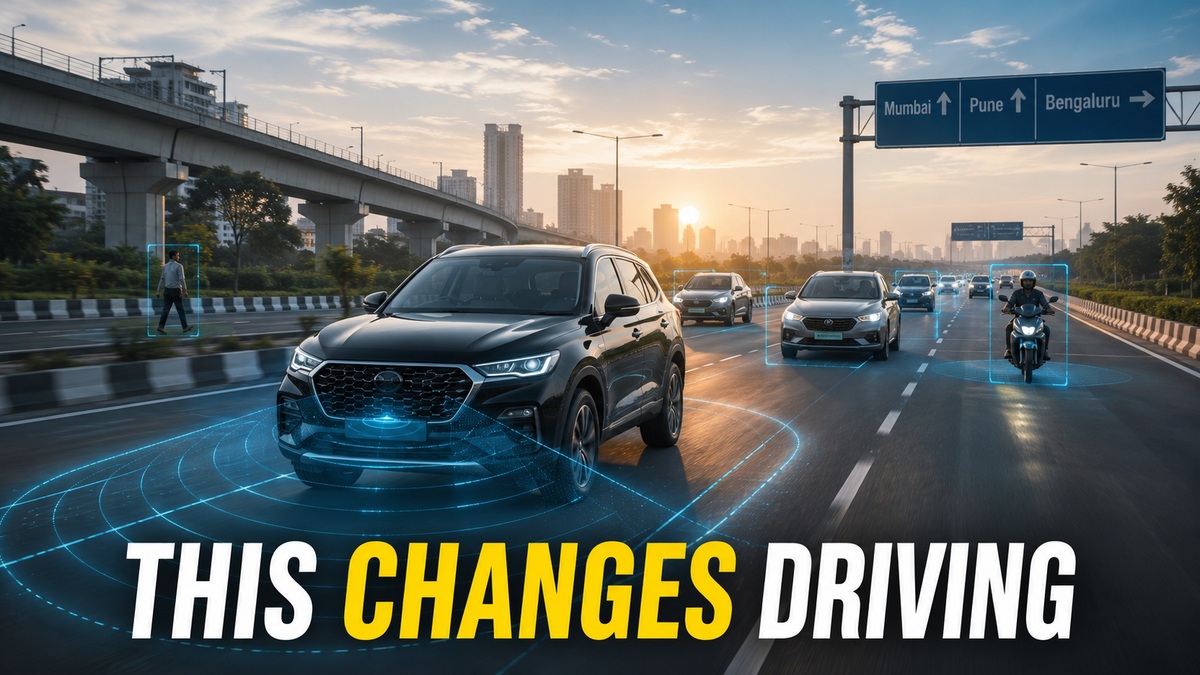
India Opens the Door to Self-Driving Safety Tech
A Turning Point for Automotive Safety in India
For decades, automotive innovation has often followed a familiar pattern. Technologies debut in luxury vehicles, gradually become more affordable, and eventually reach mainstream buyers. Features such as airbags, ABS, electronic stability control, and connected car technology all followed this path.
Now, India appears to be approaching the next major evolution.
Advanced driver assistance systems—commonly referred to as ADAS—are steadily moving from premium vehicles into mass-market segments. At the same time, policymakers, automakers, suppliers, and technology companies are increasingly discussing the future of intelligent mobility and automated driving.
While fully self-driving cars may still be years away from widespread deployment on Indian roads, the country's growing openness toward advanced safety technologies could represent one of the most significant shifts in automotive development in recent years.
The implications extend far beyond convenience. They touch road safety, insurance, vehicle pricing, infrastructure development, software innovation, and the competitive future of the automotive industry itself.
What Is Self-Driving Safety Technology?
When people hear the term "self-driving," many imagine vehicles operating without any human intervention.
The reality is more nuanced.
Today's automotive industry is focused primarily on advanced safety systems that assist drivers rather than replace them entirely.
These technologies include:
Adaptive Cruise Control
The vehicle automatically adjusts speed based on surrounding traffic conditions.
Automatic Emergency Braking
Sensors detect potential collisions and can apply brakes if the driver fails to react.
Lane Keeping Assistance
The vehicle helps maintain its position within lane markings.
Blind Spot Monitoring
Drivers receive warnings about vehicles hidden in difficult-to-see areas.
Driver Attention Monitoring
Systems monitor signs of fatigue or distraction and provide alerts when necessary.
Traffic Sign Recognition
Vehicles identify and display speed limits and road signs.
Collectively, these features create a safer driving environment while serving as foundational building blocks for future autonomous vehicles.
Why India's Decision Matters
India is one of the world's largest automotive markets.
Every major automaker views the country as a critical growth destination. As vehicle ownership rises and urbanization continues, road safety has become an increasingly important priority.
The introduction and wider acceptance of advanced safety technologies could help address several long-standing challenges.
Reducing Human Error
Globally, human error remains one of the leading causes of accidents.
Distraction, fatigue, poor judgment, and delayed reactions contribute significantly to crashes.
ADAS systems are designed specifically to mitigate these risks by providing additional layers of protection.
Encouraging Safer Driving Behavior
Driver assistance technologies do more than intervene during emergencies.
Many systems continuously encourage better driving habits through alerts, warnings, and active support functions.
Supporting Growing Traffic Density
India's road network is becoming increasingly crowded.
Intelligent safety systems can help drivers manage complex traffic situations more effectively, particularly on highways and urban expressways.
Why Automakers Are Paying Close Attention
For manufacturers, this transition represents both an opportunity and a challenge.
Historically, performance, fuel efficiency, styling, and pricing dominated purchase decisions.
Today, technology is becoming equally important.
Consumers increasingly compare vehicles based on:
Safety features
Connectivity
Driver assistance systems
Digital ecosystems
Software capabilities
As a result, ADAS is evolving into a key differentiator.
Automakers that can successfully deliver reliable, affordable safety technologies may gain a significant competitive advantage.
The Technology Race Has Already Begun
The competitive landscape is shifting rapidly.
Premium brands introduced sophisticated driver assistance systems years ago. More recently, these technologies have started appearing in vehicles at lower price points.
This trend is accelerating.
Manufacturers understand that buyers increasingly expect:
Adaptive cruise control
Lane assistance
Emergency braking
360-degree monitoring
Connected safety systems
As adoption expands, technology that once felt exclusive may become standard equipment.
The result is a new technology race where software, sensors, cameras, and artificial intelligence become as important as horsepower and fuel economy.
What This Means for Car Buyers
Consumers stand to gain substantially from wider deployment of intelligent safety technologies.
Safer Daily Driving
Many accidents occur due to brief lapses in attention.
Advanced safety systems provide an additional safety net during critical moments.
Reduced Driver Fatigue
Long highway journeys can be physically and mentally demanding.
Features such as adaptive cruise control and lane-centering assistance reduce workload and improve comfort.
Better Resale Value
Vehicles equipped with modern safety technology may remain more desirable in the used-car market.
Improved Confidence
New drivers and families often prioritize safety.
Advanced assistance features can enhance confidence behind the wheel.
Challenges That Cannot Be Ignored
Despite the potential benefits, significant hurdles remain.
Infrastructure Readiness
Many ADAS systems depend on:
Clear lane markings
Consistent road signage
Predictable traffic flow
Infrastructure improvements will play a crucial role in maximizing effectiveness.
Cost Considerations
Advanced sensors, radar units, cameras, and computing hardware add cost.
Manufacturers must balance affordability with technology adoption.
Driver Education
One of the biggest risks involves misunderstanding system capabilities.
Drivers may mistakenly assume assistance systems are fully autonomous.
Education will be essential to ensure safe usage.
Mixed Traffic Conditions
Indian roads often present unique challenges:
Two-wheelers
Pedestrians
Animals
Informal traffic patterns
Developing systems capable of handling these conditions requires substantial engineering effort.
The Impact on the Automotive Supply Chain
The move toward intelligent safety systems affects more than vehicle manufacturers.
Suppliers of:
Cameras
Radar systems
LiDAR technologies
Semiconductor chips
AI software
Mapping solutions
stand to benefit significantly.
This creates opportunities for both global suppliers and emerging domestic technology companies.
Over time, India could become a major development hub for automotive software and intelligent mobility solutions.
Insurance and Fleet Implications
Insurance providers are watching these developments closely.
If advanced safety systems reduce accident frequency and severity, insurers may eventually adjust pricing models.
Commercial fleet operators could also benefit.
For logistics companies, ride-hailing operators, and transportation businesses, even small improvements in safety can generate substantial cost savings.
Reduced accidents mean:
Lower repair expenses
Less downtime
Improved operational efficiency
Better driver safety outcomes
Could India Become a Future Autonomous Vehicle Market?
The path toward full autonomy remains long.
However, every generation of driver assistance technology helps build the foundation.
Industry experts often describe autonomous driving as a progression through multiple stages.
India's growing acceptance of advanced safety systems could accelerate movement through these stages over time.
The journey may begin with:
Emergency braking
Lane assistance
Adaptive cruise control
Eventually evolving toward increasingly sophisticated automated capabilities.
The timeline remains uncertain, but the direction is becoming clearer.
Competitor Impact Across the Industry
Manufacturers unable to keep pace with technology adoption may face increasing pressure.
Consumers are becoming more informed and safety conscious.
Vehicles lacking modern assistance systems could appear less competitive compared to rivals offering:
Advanced safety packages
Enhanced driver support
Connected mobility ecosystems
As competition intensifies, innovation cycles may shorten, resulting in faster feature rollouts across the market.
Ultimately, buyers benefit from this competitive pressure.
Why This Moment Feels Different
The automotive industry has experienced numerous technological transitions.
Yet this one carries unique significance.
Unlike performance upgrades or infotainment improvements, advanced safety systems directly influence accident prevention and occupant protection.
The discussion is no longer limited to luxury innovation.
It is increasingly centered on making roads safer for everyone.
That shift changes the conversation entirely.
The Road Ahead
India's automotive sector stands at the beginning of an important transformation.
Advanced driver assistance systems are gradually moving into the mainstream, creating opportunities for safer roads, smarter vehicles, and a more technology-driven automotive ecosystem.
Challenges remain. Infrastructure improvements, affordability concerns, regulatory frameworks, and consumer education will all influence the pace of adoption.
Nevertheless, the momentum is undeniable.
As automakers compete to deliver increasingly sophisticated safety technologies, the future of driving in India may become significantly safer, smarter, and more connected than ever before.