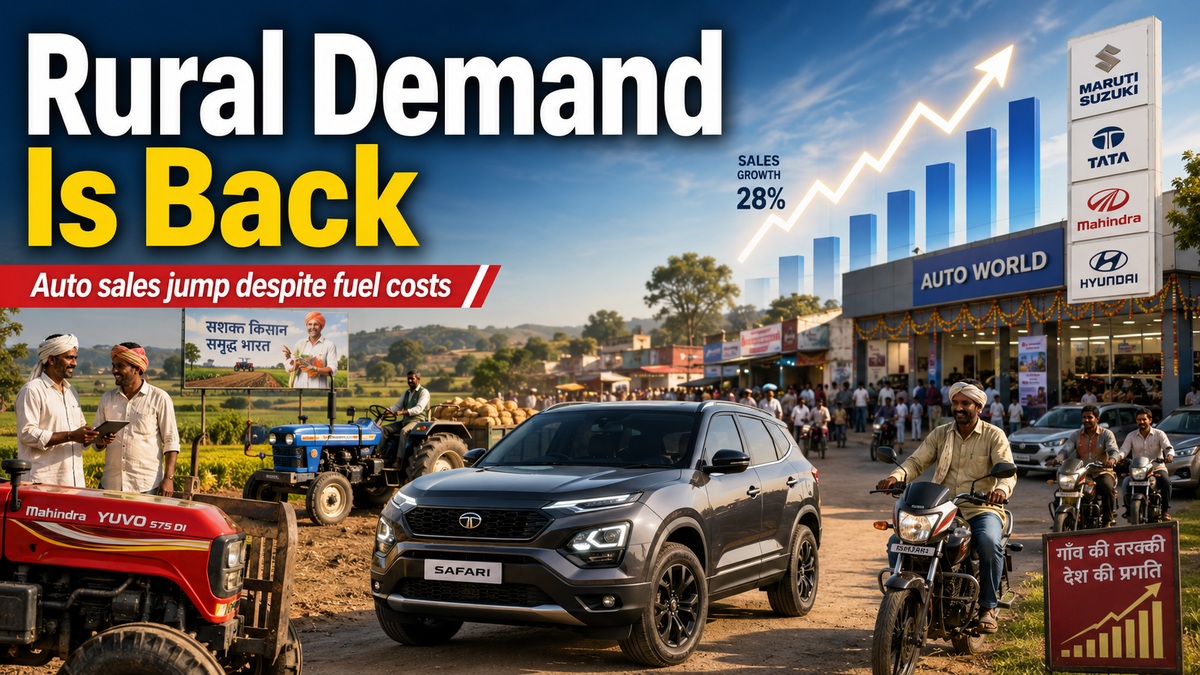
India’s vehicle retail market expanded strongly in May 2026 despite higher fuel costs, weather-related disruptions and global economic uncertainty. Beneath the headline growth lies a more important trend: rural demand is returning, and it could become the single biggest force shaping vehicle sales during the second half of the year.
Introduction
The Indian automobile industry has spent much of the last few years navigating an unusually complex environment. Supply chain disruptions, inflation, changing consumer preferences, rising ownership costs and global geopolitical tensions have all influenced buyer behavior. Yet one of the most important stories of 2026 may be emerging from a place many market observers had temporarily stopped focusing on: rural India.
Recent retail registration data showed a healthy increase in vehicle sales despite fuel price pressure and seasonal challenges. While headline numbers naturally attract attention, the deeper significance lies in where growth is coming from. Evidence suggests improving sentiment in rural markets is beginning to translate into actual purchases across passenger vehicles, two-wheelers and selected utility segments.
If that trend continues through the monsoon season and into the festive period, rural India could become the industry's most powerful growth engine in the second half of 2026.
What Happened
India's vehicle retail market recorded strong year-on-year growth during May 2026. The increase came at a time when many analysts expected consumers to become more cautious because of higher fuel expenses and broader economic uncertainty.
Instead, retail activity remained resilient. Passenger vehicle registrations performed particularly well, while two-wheelers also posted meaningful gains. Dealers across multiple regions reported improving inquiry levels and increased showroom traffic.
Another notable trend was the continued expansion of electric vehicle adoption across several categories. While EV volumes remain relatively small compared to conventional vehicles in many regions, consumer awareness and acceptance continue to improve.
The performance is significant because it occurred despite several factors that traditionally suppress vehicle purchases. Extreme temperatures affected parts of the country, fuel costs remained a concern and global geopolitical developments created uncertainty around commodity prices and economic growth.
Yet consumers continued spending.
That resilience suggests underlying confidence may be stronger than many expected at the beginning of the year.
Why Rural India Matters More Than Ever
For decades, rural India has played a critical role in shaping automotive demand. Two-wheelers, entry-level passenger vehicles, utility vehicles and tractors have historically depended on agricultural income, monsoon performance and rural purchasing power.
The difference in 2026 is that rural demand may no longer be merely supportive. It could become the primary growth driver.
Several factors are contributing to this possibility.
First, expectations surrounding agricultural activity remain relatively positive. Rural income sentiment often improves when monsoon conditions are favorable, leading households to make larger purchases.
Second, financing accessibility has improved over time. Financial institutions have expanded their reach into smaller towns and semi-urban regions, making vehicle ownership more attainable.
Third, aspirational buying behavior continues to evolve. Consumers in rural markets increasingly seek products that deliver status, convenience, safety and mobility advantages previously associated mainly with urban ownership patterns.
Fourth, infrastructure development continues to improve connectivity. Better roads and expanding economic opportunities increase the practical value of vehicle ownership.
These trends create a powerful combination. When confidence improves, demand can accelerate rapidly because many purchases represent deferred replacement cycles or first-time ownership opportunities.
That dynamic is especially important for automakers seeking growth beyond heavily penetrated urban markets.
Missing Details Behind the Headlines
Although the sales numbers paint an encouraging picture, several important details remain unclear.
One missing element is the exact contribution of rural versus urban markets. While reports indicate stronger rural demand, the available data does not fully quantify how much of total growth originated from rural regions.
Another unanswered question involves model mix. Were buyers primarily choosing affordable entry-level vehicles, or was demand spreading into premium categories as well? Understanding that distinction would provide a clearer picture of consumer confidence.
There is also limited visibility into financing trends. Vehicle sales growth can be influenced by easier credit availability, lower down-payment requirements or promotional financing campaigns. Without that context, it is difficult to determine how much demand is being driven by fundamental purchasing power versus financial support mechanisms.
Inventory conditions represent another missing piece. Dealer stock levels often influence pricing, discounts and delivery timelines. Strong retail growth may reduce inventory pressure, but the exact impact varies significantly across brands and regions.
Finally, while EV adoption is reportedly increasing, the available information does not provide detailed segment-level breakdowns. Understanding where electric growth is occurring would help assess the pace of long-term market transformation.
Contradictions and Areas of Uncertainty
The most obvious contradiction in the current market is the coexistence of strong sales and rising ownership costs.
Conventional economic logic suggests higher fuel prices should reduce vehicle demand. Yet consumers continue purchasing vehicles.
There are several possible explanations.
Consumers may be prioritizing mobility needs over cost concerns. Rising incomes in certain regions may also be offsetting higher operating expenses. In addition, buyers may be viewing vehicles as essential purchases rather than discretionary spending.
Another contradiction involves the broader economic backdrop. Global uncertainty, geopolitical tensions and commodity volatility typically encourage caution. However, retail registrations suggest confidence remains surprisingly resilient.
There is also uncertainty regarding sustainability. A single month of strong performance does not automatically guarantee a long-term trend. Seasonal influences, promotional activity and timing effects can temporarily boost registrations.
The coming months will determine whether May represents the beginning of a broader demand cycle or merely a temporary spike.
What This Means for Vehicle Buyers
Consumers planning a vehicle purchase should pay close attention to these trends.
If rural demand continues strengthening, dealers may experience faster inventory movement during the festive season. That could reduce the depth of discounts available on certain high-demand models.
Popular SUVs, utility vehicles and motorcycles could see longer waiting periods if demand accelerates faster than production.
Stronger market conditions may also support used vehicle values. Buyers who purchase today could benefit from healthier resale performance if demand remains elevated.
At the same time, consumers should avoid rushing into a purchase purely because of market momentum. Vehicle selection should remain based on budget, usage requirements, financing affordability and long-term ownership costs.
Fuel efficiency remains particularly important given ongoing price uncertainty. Buyers should carefully evaluate total ownership expenses rather than focusing solely on purchase price.
Electric vehicles also deserve consideration where charging infrastructure and driving patterns support practical ownership.
Market Impact Across the Industry
The implications extend far beyond automakers.
Dealers stand to benefit from improved showroom traffic and healthier conversion rates. Stronger retail activity can improve profitability while reducing dependence on aggressive discounting.
Vehicle financiers may experience increased loan demand, particularly in smaller cities and rural regions where ownership penetration still has room to expand.
Component manufacturers could also benefit from higher production volumes if automakers respond to stronger demand forecasts by increasing output.
Insurance providers, service networks and aftermarket businesses would likely experience secondary growth as new vehicles enter the ownership cycle.
Investor sentiment toward the automotive sector could improve as well. Sustained retail growth provides confidence that consumer demand remains healthy despite external challenges.
Perhaps most importantly, the industry gains evidence that growth opportunities still exist beyond traditional urban strongholds.
Who Benefits the Most?
Several manufacturers appear particularly well positioned if rural demand becomes the dominant growth driver.
Companies with extensive dealership networks and strong rural penetration could enjoy a significant advantage. Brands with established reputations for reliability, affordability and service accessibility are likely to attract a larger share of incremental demand.
Manufacturers with strong SUV portfolios may benefit from shifting consumer preferences toward utility-oriented vehicles.
Two-wheeler leaders could also see meaningful gains because motorcycles remain one of the most important mobility solutions across rural India.
Utility vehicle specialists may capture demand from consumers upgrading from two-wheelers or older vehicles.
Conversely, brands heavily dependent on premium urban markets may experience comparatively slower growth if rural demand becomes the primary expansion engine.
Future Outlook for the Second Half of 2026
The next few months will be critical.
Monsoon performance remains one of the most important variables. A favorable agricultural season would likely strengthen rural income expectations and support vehicle purchases.
The festive season could provide another major catalyst. Historically, many consumers align vehicle purchases with festive celebrations, creating strong retail momentum.
Interest rate conditions, financing availability and fuel price trends will also influence buying decisions.
If current momentum continues, India could experience one of its strongest rural-led automotive growth periods in recent years.
However, risks remain. Global commodity price fluctuations, geopolitical disruptions and unexpected economic shocks could affect consumer confidence.
For now, the balance of evidence points toward cautious optimism.
The industry's strongest growth story may no longer be concentrated in major metropolitan areas. Instead, it may be unfolding across thousands of towns and villages that collectively represent one of the world's largest mobility opportunities.
Conclusion
India's latest vehicle retail performance delivered more than a positive sales headline. It revealed an emerging shift in market dynamics.
Despite fuel price concerns and economic uncertainty, consumers continue purchasing vehicles. The strongest signal comes from improving rural demand, which appears increasingly capable of supporting industry growth on its own.
For automakers, dealers, financiers and suppliers, the message is clear: the next phase of growth may come from markets that were once viewed primarily as supplementary.
If monsoon conditions remain supportive and consumer confidence continues improving, rural India could become the defining force behind the automotive industry's performance through the remainder of 2026.
Frequently Asked Questions
Why are auto sales rising despite higher fuel prices?
Improving consumer confidence, better financing availability and growing mobility needs appear to be outweighing fuel price concerns.
Why is rural demand important for the auto industry?
Rural markets represent a large share of potential buyers for two-wheelers, utility vehicles, entry-level cars and tractors.
Will vehicle discounts reduce later in 2026?
If demand remains strong and inventory levels tighten, discounts on popular models may become less aggressive.
Which vehicle segments could benefit most?
Two-wheelers, SUVs, utility vehicles and vehicles targeted at first-time buyers could see the strongest demand growth.
What is the biggest risk to this outlook?
Weak monsoon performance, economic disruptions or significant increases in ownership costs could slow demand momentum.