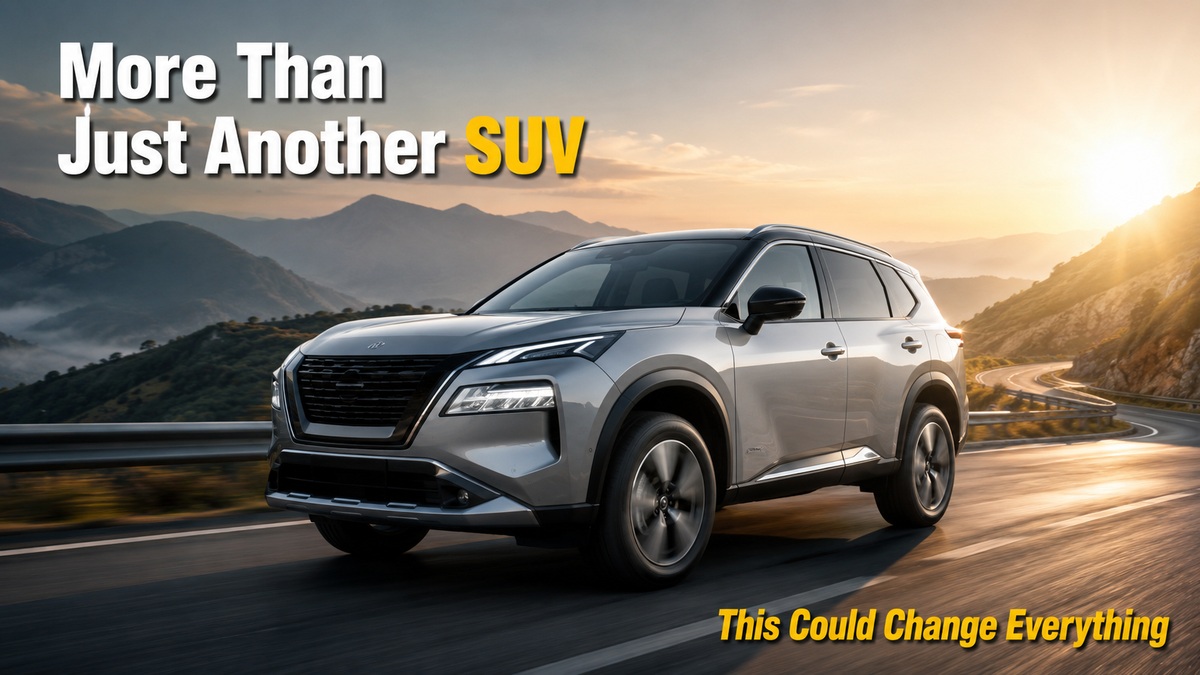
Nissan has expanded the reach of its electrified SUV strategy with the latest X-Trail e-POWER x e-4ORCE. The vehicle combines an electric-drive hybrid system with dual-motor all-wheel drive, aiming to deliver the smoothness of an EV while retaining the convenience of a petrol-powered vehicle.
Introduction
The global SUV market is crowded with hybrids, plug-in hybrids, and battery-electric vehicles all competing for the same buyers. Standing out has become increasingly difficult. Nissan believes it has found a distinctive answer through e-POWER and e-4ORCE technologies, and the latest X-Trail is the clearest expression of that strategy yet.
The new Nissan X-Trail e-POWER x e-4ORCE arrives at a time when consumers want better fuel economy, lower emissions, and improved driving refinement without necessarily committing to charging infrastructure. Rather than adopting the same formula used by many rivals, Nissan continues to position e-POWER as an electric-drive experience powered by a petrol engine that primarily generates electricity.
That approach has attracted attention in multiple markets and is now becoming a central pillar of Nissan's future product plans. The latest X-Trail therefore represents more than a product update. It is an important test of Nissan's broader electrification strategy.
What Happened
Recent reports from several international markets indicate that Nissan is expanding and updating the X-Trail lineup with the e-POWER x e-4ORCE combination. The technology pairs an electrified drive system with dual-motor all-wheel drive, delivering improved traction, torque distribution, and vehicle stability.
Unlike conventional hybrids where the engine frequently powers the wheels, e-POWER is designed around electric motor propulsion. Drivers experience immediate response and smooth acceleration characteristics similar to an EV. The petrol engine serves primarily as an electricity generator, reducing dependence on public charging networks.
The e-4ORCE component adds a second motor and sophisticated torque management capabilities. By continuously adjusting power distribution between front and rear axles, the system aims to improve grip in challenging weather conditions while also enhancing ride comfort and cornering stability.
The X-Trail remains positioned as a family-oriented midsize SUV, offering practicality, comfort, safety technologies, and versatility. However, the electrified powertrain now becomes one of its strongest selling points.
Technology That Defines the X-Trail
The most important aspect of the X-Trail is not its styling or even its equipment list. It is the driving experience created by the e-POWER architecture. Many consumers are interested in EV-like refinement but remain concerned about charging availability, long-distance travel, and ownership transitions. Nissan is targeting exactly those concerns.
Because electric motors are responsible for propulsion, acceleration tends to feel smoother and more immediate than many traditional hybrid systems. Noise levels can also be reduced in everyday driving conditions. For urban commuters and family buyers, those characteristics can make a noticeable difference.
The e-4ORCE system adds another layer of sophistication. Rather than acting solely as an off-road tool, it is designed to improve confidence and composure in everyday driving. Better traction during rain, more predictable cornering, and smoother weight transfer all contribute to a more premium driving experience.
Missing Details
While reports confirm the arrival of the X-Trail e-POWER x e-4ORCE in various markets, several important details remain unclear. Market-specific pricing, equipment packaging, and variant structures vary significantly across regions. This makes direct comparisons difficult.
Questions also remain regarding future availability in certain emerging markets, including India. Although interest in the model remains strong among enthusiasts and SUV buyers, Nissan has not consistently confirmed a long-term roadmap for every market mentioned in speculation reports.
Detailed ownership cost projections, real-world efficiency figures, and long-term maintenance comparisons also remain limited. These are factors buyers will want before making purchasing decisions.
Another area lacking clarity is how aggressively Nissan intends to expand e-POWER technology across future SUVs. The answer could significantly influence the brand's competitive position over the next several years.
Contradictions and Reporting Differences
One interesting aspect of the coverage is the variation in emphasis across different reports. Some describe the vehicle primarily as a technology showcase focused on e-POWER and e-4ORCE innovation. Others frame it as part of a broader model refresh or regional product rollout.
There are also differences in how future market expansion is discussed. Certain reports suggest growing momentum for wider deployment, while others focus on individual market launches without drawing broader conclusions.
These differences do not necessarily represent factual conflicts. Instead, they highlight how Nissan's strategy is evolving at different speeds depending on local regulations, consumer demand, and competitive pressures.
Buyer Advice
For prospective SUV buyers, the new X-Trail presents an interesting proposition. It is particularly attractive for drivers who want some of the benefits associated with EV ownership but are not ready to transition fully to a battery-electric vehicle.
Buyers who spend most of their time in urban environments may appreciate the smooth electric-drive feel and reduced fuel consumption. Families looking for a comfortable long-distance vehicle may value the absence of charging concerns while still gaining many electrification benefits.
However, shoppers should compare the X-Trail carefully against conventional hybrids, plug-in hybrids, and even selected EVs. Purchase price, incentives, local fuel costs, and expected ownership duration all influence overall value.
Those prioritizing all-weather capability should pay particular attention to the e-4ORCE system. It may provide advantages in regions with heavy rain, snow, or varied road conditions.
Potential buyers should also examine warranty coverage, dealership support, and long-term servicing requirements. Advanced technology can improve the driving experience, but ownership confidence remains equally important.
Market Impact
The X-Trail e-POWER x e-4ORCE arrives at a crucial moment for the automotive industry. Consumer demand for electrified vehicles continues growing, yet many buyers remain hesitant about full EV adoption.
Nissan is effectively positioning e-POWER as a bridge technology. Instead of forcing consumers into an immediate transition, it offers an intermediate step that feels familiar while introducing many benefits of electrification.
If successful, this strategy could influence how other manufacturers approach future product development. Rather than viewing the market as a simple choice between hybrids and EVs, automakers may increasingly explore alternative pathways.
The model also strengthens Nissan's presence in the profitable midsize SUV category, where competition remains intense and margins are often higher than those of smaller passenger vehicles.
Competitor Impact
The biggest pressure will likely fall on rival manufacturers offering conventional hybrid SUVs. Nissan's electric-drive approach creates a unique marketing message that differs from traditional hybrid systems.
Brands with established hybrid portfolios will continue benefiting from strong reputations and broad product ranges. However, Nissan now has a clearer technological identity that may resonate with buyers seeking something different.
Plug-in hybrid competitors face a different challenge. Their products often deliver greater electric-only capability but require charging discipline to maximize benefits. Nissan's system removes that requirement, potentially appealing to buyers seeking simplicity.
Battery-electric SUVs are unlikely to lose relevance, but the X-Trail may attract consumers who are not yet comfortable making the leap to full electrification.
Future Outlook
The future of the X-Trail e-POWER x e-4ORCE depends on more than sales figures. It serves as an indicator of whether consumers continue embracing transitional electrification technologies during the industry's shift toward lower-emission mobility.
If demand remains strong, Nissan could expand e-POWER availability across additional vehicle categories and markets. Such a move would strengthen the company's differentiation strategy and potentially improve brand perception among technology-focused buyers.
Regulatory developments, fuel prices, battery costs, and charging infrastructure expansion will all influence how long this type of solution remains attractive. For now, however, it occupies a valuable middle ground.
Conclusion
The new Nissan X-Trail e-POWER x e-4ORCE is not merely another SUV launch. It represents Nissan's attempt to define a unique path through the industry's electrification transition. By combining electric-drive characteristics with the convenience of a petrol-powered energy source and advanced all-wheel-drive capability, the company has created a product with genuine differentiation.
For buyers, the appeal lies in balancing efficiency, practicality, technology, and ease of ownership. For competitors, it raises questions about how future electrified SUVs should be positioned. And for Nissan, it may become one of the most important products in its global portfolio over the next several years.
FAQ
What is e-POWER?
A hybrid system where electric motors drive the wheels while a petrol engine primarily generates electricity.
What is e-4ORCE?
Nissan's dual-motor all-wheel-drive technology designed to improve traction, stability, and ride comfort.
Is the X-Trail a fully electric vehicle?
No. It uses electrified propulsion but does not rely on external charging.
Who should consider buying it?
Drivers seeking EV-like driving characteristics without committing to charging infrastructure.
Why is it important for the market?
It highlights an alternative approach to electrification at a time when buyers are considering multiple pathways toward lower-emission mobility.