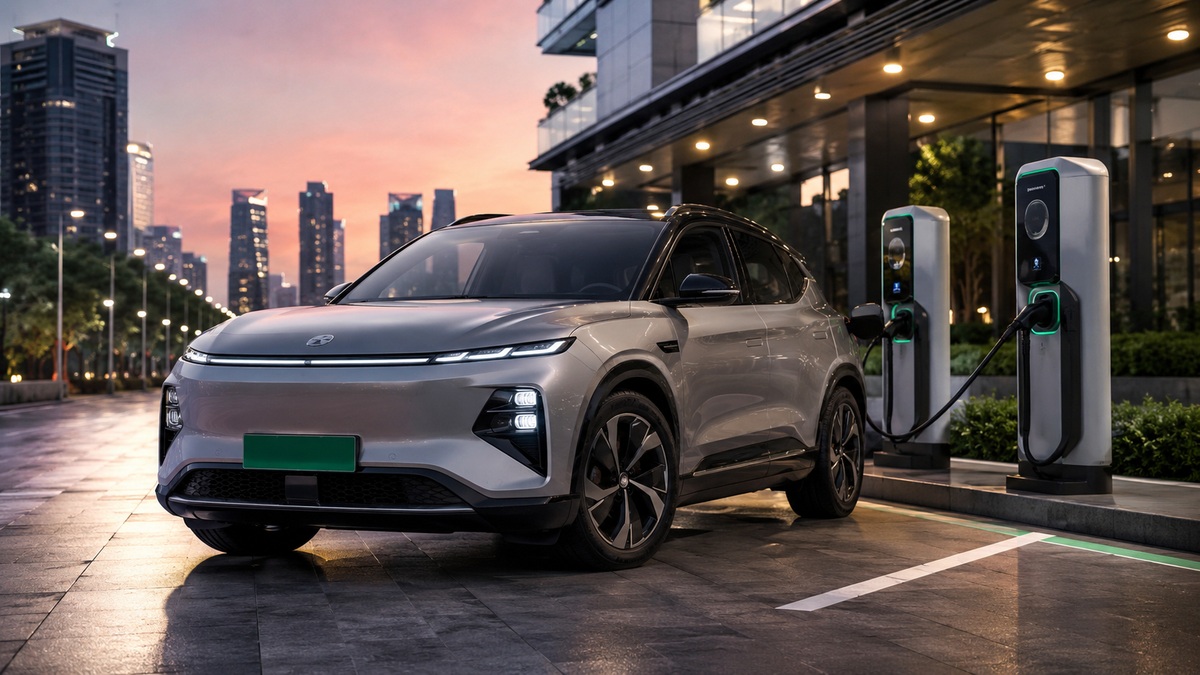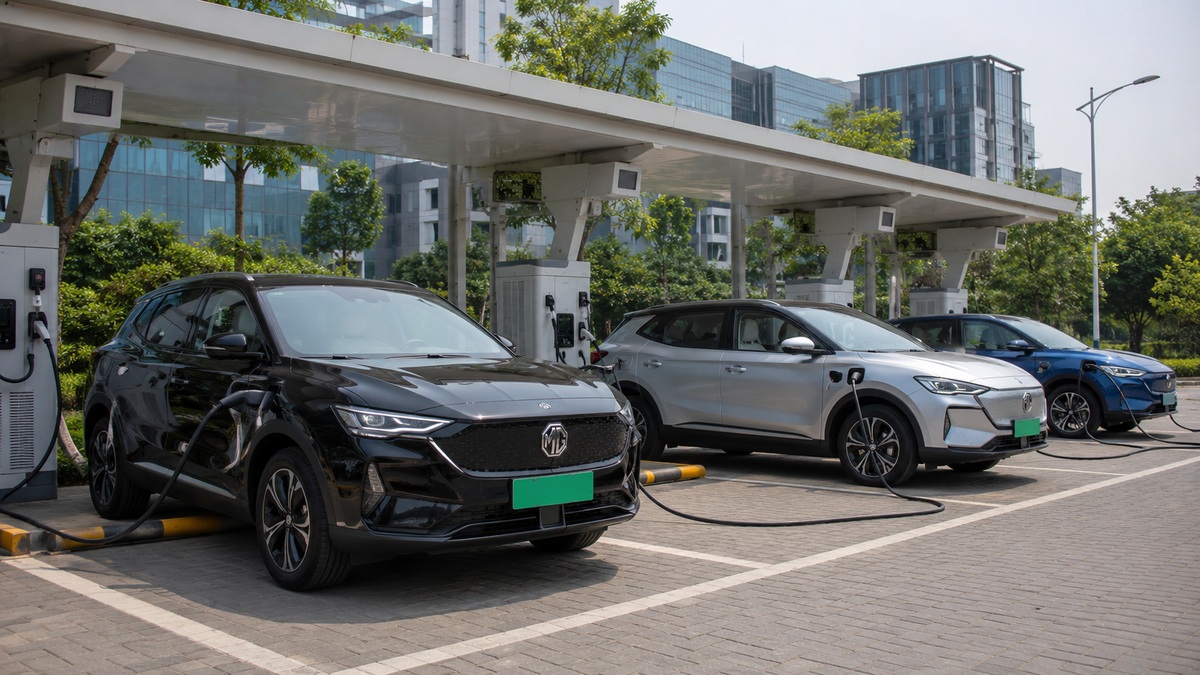
MG has completed the rollout of 1,000 charging points across India, marking a significant milestone in its effort to strengthen the country’s EV ecosystem. While the headline number is impressive, the bigger story is what it means for buyer confidence, competitive positioning, and the future pace of electric vehicle adoption.
Introduction
For years, India’s electric vehicle conversation has revolved around one persistent concern: where will drivers charge? Battery range continues to improve, ownership costs are becoming more attractive, and government support has encouraged adoption. Yet range anxiety and charging accessibility remain major obstacles for mainstream consumers.
That reality explains why MG’s achievement of installing 1,000 charging points deserves attention. The milestone is not merely an infrastructure update. It represents a strategic attempt to tackle one of the biggest psychological barriers preventing broader EV adoption.
What Happened
MG’s charging initiative began with an ambitious target: deploy 1,000 charging points within 1,000 days. Earlier reports indicated the company had crossed 500 chargers in roughly 500 days, suggesting steady execution toward the larger objective.
The network now reportedly spans more than 470 locations across India. Charging points have been installed at destinations including residential communities, hotels, malls, institutions, resorts, and townships. The goal appears to be maximizing convenience rather than concentrating chargers in a handful of urban centers.
The strategy is noteworthy because it focuses heavily on destination charging. Rather than relying solely on highway fast-charging corridors, MG has expanded access where vehicles naturally spend extended periods parked.
The charging push is also linked to broader plans. MG has indicated it intends to launch multiple new-energy vehicles in the coming years, creating a stronger ecosystem around future products.
Missing Details
Despite the milestone, several important questions remain unanswered.
First, the headline figure of 1,000 chargers does not fully explain utilization rates. A network can be extensive on paper but underused if chargers are poorly located, unreliable, or difficult to access.
Second, there is limited information regarding charger power outputs. Buyers increasingly care about charging speed, and the difference between AC destination charging and high-speed DC charging can significantly influence ownership experiences.
Third, public information does not clearly break down geographic distribution. Understanding whether chargers are concentrated in major metropolitan regions or spread evenly across smaller cities would help assess the network’s real impact.
Fourth, charger uptime data remains unavailable. Reliability is often more important than charger count. A smaller network with consistently functioning chargers may offer greater value than a larger network with operational challenges.
Contradictions and Data Gaps
The available information is broadly consistent but contains differences in emphasis and detail.
Some reports focus on the total number of chargers, while others emphasize the number of locations. Certain descriptions highlight residential charging infrastructure, whereas later updates point to a wider destination-charging approach across commercial and institutional properties.
Another difference involves site coverage. References to over 470 sites contrast with earlier reports describing deployments across selected cities and partner locations. This is not necessarily a contradiction, but it reflects the evolution of the program over time.
There is also limited clarity regarding the exact mix of charger types within the network. Buyers evaluating long-distance EV ownership would benefit from more transparency regarding charging speeds and accessibility.
Buyer Advice
For prospective EV buyers, the significance of this development extends beyond MG owners.
Every additional charging point reduces uncertainty. Even if drivers rarely use public charging, knowing infrastructure exists nearby can influence purchase decisions.
However, buyers should avoid focusing exclusively on charger counts. Practical ownership depends on several factors including home charging availability, daily driving distance, charger reliability, and software integration.
Consumers considering an electric vehicle should evaluate whether frequently traveled routes are adequately covered. They should also verify compatibility with available charging networks and examine real-world charging experiences shared by existing owners.
For urban users with predictable commuting patterns, expanding destination charging networks make EV ownership increasingly practical. Apartment residents, traditionally one of the most challenging customer groups for EV adoption, could particularly benefit from broader charging access.
Market Impact
The broader market implications may prove more significant than the headline itself.
India’s EV sector has often faced a classic chicken-and-egg problem. Consumers hesitate to purchase EVs without charging infrastructure, while infrastructure investment depends on growing EV adoption.
By investing heavily in charging deployment, MG is effectively attempting to break that cycle.
The move also reflects a shift in competitive strategy. Automakers increasingly recognize that success in the EV era requires more than producing attractive vehicles. Ownership ecosystems, software services, charging access, and energy partnerships are becoming central components of brand value.
If the network improves consumer confidence, the benefits could extend beyond MG’s own sales. Greater comfort with public charging may encourage adoption across the entire EV market.
The initiative also supports broader industry goals related to sustainability and reduced dependence on conventional fuels.
Competitor Impact
MG’s infrastructure investment places pressure on competitors to strengthen their own ecosystem strategies.
Major domestic manufacturers have already invested heavily in electric mobility, but charging support is becoming an increasingly important differentiator.
Competitors now face a strategic choice. They can invest directly in charging infrastructure, expand partnerships with charging operators, or pursue hybrid approaches that combine both.
The development may accelerate collaboration across the industry. Shared charging ecosystems often benefit consumers more than isolated proprietary networks.
There is also a branding advantage. Companies that actively address customer concerns around charging are likely to gain credibility among first-time EV buyers.
Future Outlook
Reaching 1,000 chargers is not the end of the story. It may represent the beginning of a larger infrastructure race.
As EV adoption expands, expectations will rise. Buyers will demand faster charging, broader geographic coverage, better digital integration, and higher reliability.
The next phase of competition could focus less on charger quantity and more on charging quality. Speed, uptime, convenience, and seamless payment experiences may become the critical battlegrounds.
MG’s planned introduction of additional new-energy vehicles suggests the company views charging infrastructure as a foundational element of long-term growth rather than a standalone initiative.
Conclusion
MG’s 1,000-charger milestone matters because it addresses a challenge that has long limited EV adoption in India. The achievement alone will not eliminate range anxiety, nor does it answer every question regarding charging accessibility and reliability. However, it represents meaningful progress toward making electric mobility feel more practical and less intimidating for mainstream buyers.
The real measure of success will not be the number of chargers installed, but how effectively they are used. If drivers consistently find reliable charging where and when they need it, the impact could extend far beyond one manufacturer and help accelerate India’s transition toward electric mobility.
FAQ
What is MG’s charging milestone?
MG reports that it has deployed 1,000 EV charging points across India.
Why is this important?
Charging availability remains one of the biggest barriers to EV adoption.
Are these chargers only for MG owners?
Many destination charging solutions support broader EV compatibility depending on connector standards and access policies.
Will this eliminate range anxiety?
It helps reduce it, but charging reliability, speed, and coverage remain important factors.
What happens next?
The focus is likely to shift toward network quality, faster charging, and support for future EV launches.