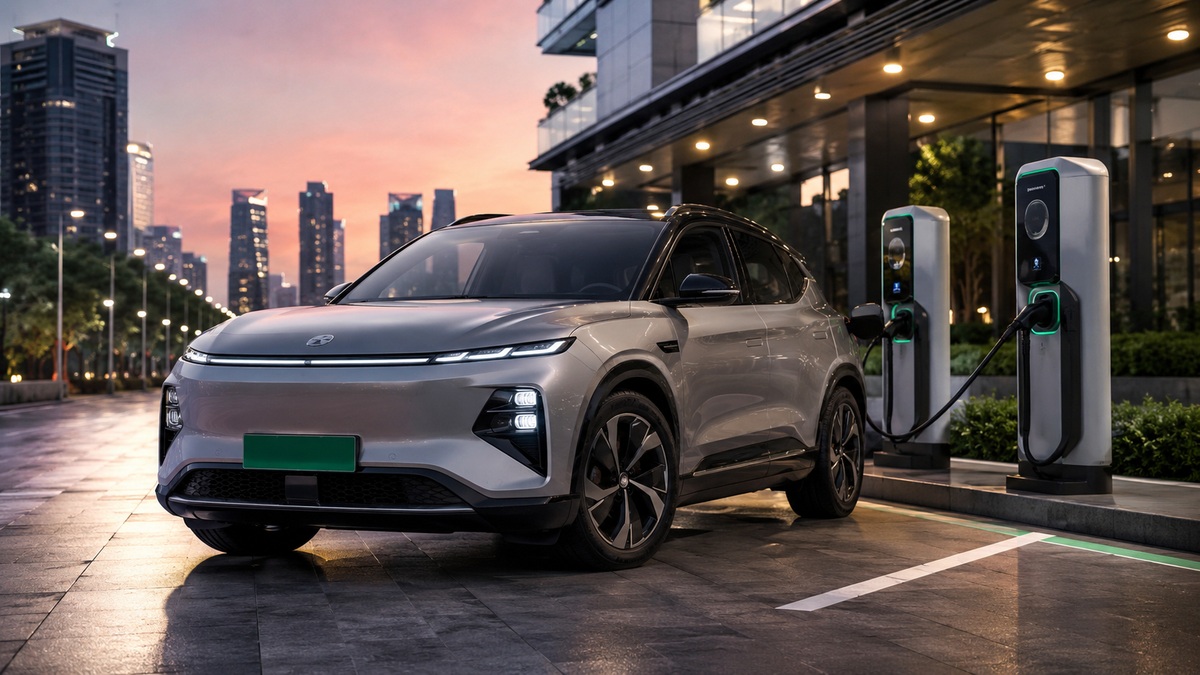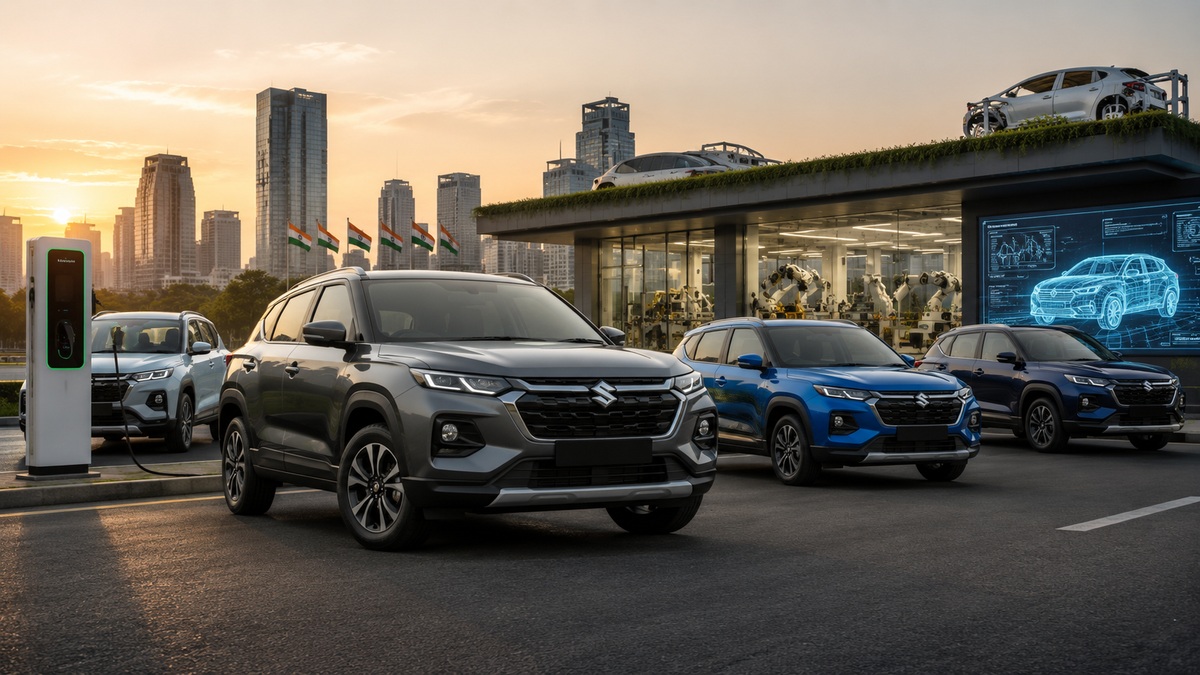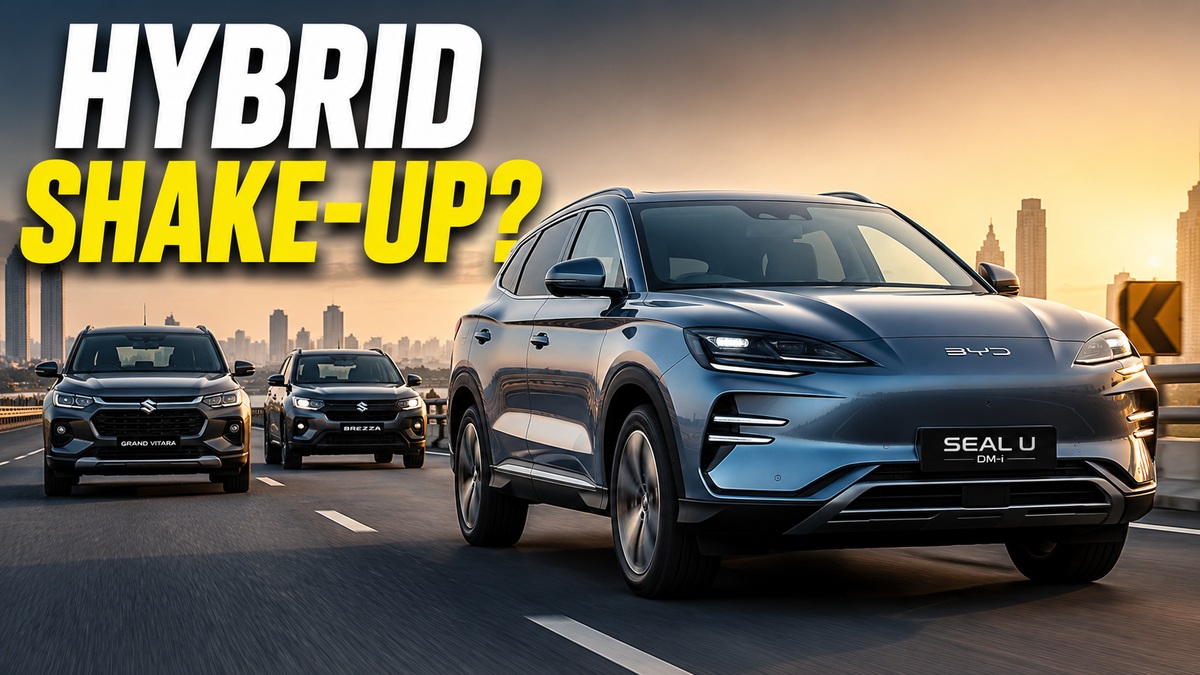
BYD's upcoming Seal U plug-in hybrid SUV brings an electric-first DM-i powertrain, a claimed 1,200km-plus combined range, and a new challenge for India's hybrid leaders. If pricing and support are handled well, the model could pressure Maruti Suzuki and Toyota by reframing what buyers expect from a hybrid SUV.
Introduction
India's hybrid market has been shaped largely by Maruti Suzuki and Toyota. Their strong-hybrid systems have given buyers a practical middle path between petrol vehicles and full EVs: better fuel efficiency, familiar refueling, and no need to plug in. That formula has worked because it fits the Indian ownership mindset extremely well.
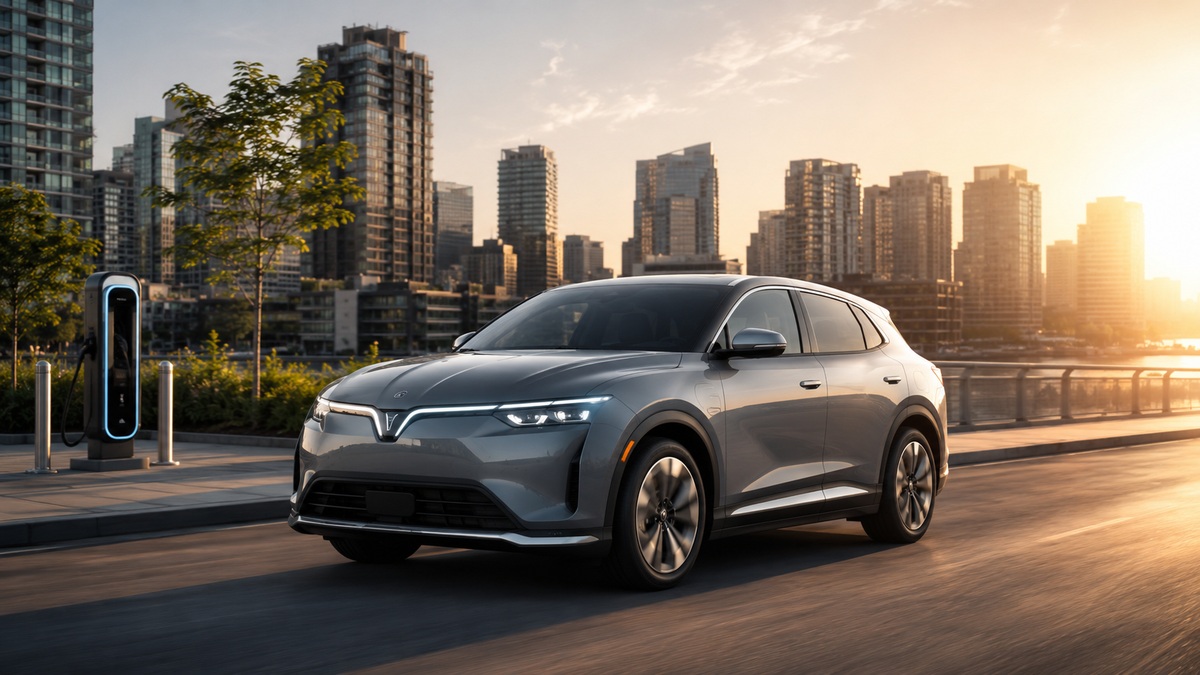
BYD is now preparing to challenge that comfort zone with a different kind of hybrid. The company's Seal U, also known as the Sealion 6 in some markets, is expected to become BYD's first plug-in hybrid offering in India by the end of 2026. More importantly, it will bring BYD's DM-i technology, an electric-first plug-in hybrid system that tries to make daily driving feel closer to an EV while keeping a petrol engine for long-distance flexibility.
That distinction matters. A conventional strong hybrid improves petrol efficiency. A plug-in hybrid can, for the right user, replace a large share of petrol driving altogether. If BYD gets the pricing, warranty, charging support and dealer experience right, the Seal U could force buyers to ask a tougher question: why settle for a hybrid that only assists the engine when one can drive like an EV for daily use?
What Happened
BYD has showcased its DM-i plug-in hybrid technology in India and confirmed that the Seal U SUV is being considered for launch within the year. The model will be imported initially, with detailed India specifications and pricing expected closer to launch.
The headline claim is a combined driving range exceeding 1,200km on a full tank and charge. Reports also point to meaningful electric-only running, though exact figures vary by market and configuration. Some references discuss around 70km of EV-only usage, others cite higher international figures, and some technology explanations mention up to 200km under specific conditions or variants.
The broad direction is clear even if the final Indian specification is not. BYD is not simply adding another electric SUV to its lineup. It is preparing a product that targets buyers who like EV running costs and smoothness but still want the security of petrol backup.
How BYD's DM-i System Works
BYD's DM-i system is built around an electric-first philosophy. In normal urban driving, the electric motor does most of the work. The petrol engine can act as a generator to maintain battery charge, and under certain high-load conditions it can also provide direct drive assistance.
This is different from many strong hybrids familiar to Indian buyers. In those vehicles, the petrol engine remains central, while the electric motor improves low-speed efficiency, start-stop smoothness and fuel economy. BYD's approach shifts the emphasis toward electric propulsion first, petrol support second.
The setup is expected to combine a petrol engine, electric motor, battery pack and BYD's Blade battery technology. Some reports mention a 1.5-litre engine, while exact Indian hardware remains to be confirmed. The important point is not only the component list but the user experience: short daily trips can potentially be completed mostly on electricity if the owner charges regularly.
Why This Could Hurt Maruti and Toyota
Maruti Suzuki and Toyota have built a strong position around efficient, low-stress hybrid ownership. Their products appeal to buyers who want better mileage without changing their driving habits. The Grand Vitara, Urban Cruiser Hyryder and Invicto-style hybrid proposition is simple: fill fuel, drive normally, save petrol.
BYD's plug-in hybrid pitch is more disruptive because it changes the comparison. Instead of asking whether a hybrid is more efficient than petrol, buyers may begin asking whether a hybrid can handle most daily driving as an EV. That is a much harder question for conventional strong hybrids to answer.
If the Seal U offers enough electric-only range for city use, owners with home or workplace charging could use very little petrol during the week. At the same time, the petrol engine would remove the long-distance anxiety associated with some EV purchases. That combination could appeal strongly to premium urban SUV buyers.
Toyota remains one of the world's strongest hybrid technology brands, and Maruti has unmatched reach in India. They are not easy targets. But BYD's strength in batteries, EV systems and global plug-in hybrid scale gives it a credible angle that could make the Indian hybrid conversation more competitive.
The Buyer Impact
For buyers, the Seal U could create a more interesting decision. Someone considering a premium strong hybrid may now have to compare three ownership paths: conventional hybrid, plug-in hybrid and full EV.
A strong hybrid is still the easiest to use. There is no charging routine, no plug-in discipline, and no dependency on parking access. For many Indian households, especially those without dedicated parking, that remains a major advantage.
A plug-in hybrid makes the most sense when the owner can charge regularly. If the car is charged at home or office, daily commuting costs can fall sharply. If it is rarely charged, the benefits shrink and the buyer may simply be carrying extra battery hardware without using its full value.
That means BYD's challenge is not just launching the car. It must educate buyers clearly. Plug-in hybrids reward the right usage pattern. The Seal U could be excellent for an apartment owner with reliable charging at work, a bungalow owner with home charging, or a family that wants EV-like city driving plus road-trip flexibility.
Market Impact
The Indian market has been moving through a phase where buyers are open to electrification but still cautious about pure EVs. Fuel prices, charging access, highway planning and resale confidence all influence decisions. BYD's plug-in hybrid approach directly addresses that hesitation.
If the Seal U gains attention, it could encourage other manufacturers to revisit plug-in hybrid plans for India. Until now, PHEVs have largely been associated with luxury brands or niche imports. A serious entry from BYD could make the category more visible and commercially relevant.
The move may also pressure policymakers and charging networks. Plug-in hybrids need charging access to deliver their best efficiency, but they are less dependent on public fast charging than EVs. That could make them a bridge technology for buyers who are not yet ready for full battery-electric ownership.
Pricing Is the Biggest Unknown
Pricing will decide how serious this threat becomes. Some industry estimates place the Seal U in the premium SUV band, possibly around the Rs 45 lakh to Rs 50 lakh zone if imported. At that level, it would not be a direct volume rival to mass-market Maruti-Toyota hybrids.
However, market impact is not always limited to direct pricing overlap. A premium plug-in hybrid can still change consumer perception. If buyers begin seeing plug-in hybrids as the next step above strong hybrids, Maruti and Toyota may face pressure to respond with more advanced systems in future models.
Localisation would be the real game-changer. If BYD eventually finds a way to price plug-in hybrids closer to upper-mainstream SUVs, the threat becomes much sharper. Until then, the Seal U may act more as a technology statement than a mass-market disruptor.
Competitor Impact
Maruti Suzuki's biggest advantage is scale. Its sales network, service reach and cost control are difficult for any new challenger to match. Even if BYD has superior plug-in hybrid technology on paper, Maruti can defend itself with familiarity, affordability and trust.
Toyota's advantage is hybrid credibility. Indian buyers already associate Toyota with durable hybrid systems. The brand can argue that its strong hybrids are simpler, proven and better suited for buyers who do not want charging responsibility.
BYD's advantage is technology ambition. It can position DM-i as a more EV-like hybrid experience, backed by battery expertise and global electrified-vehicle scale. That is the opening it will try to exploit.
Other manufacturers will be watching too. Hyundai, Kia, MG, Mahindra and Tata all need to decide how aggressively they want to pursue hybrid, plug-in hybrid and EV strategies in parallel. BYD's move could make multi-powertrain planning more urgent.
Risks and Missing Details
Several questions remain unanswered. Final India specifications are not confirmed. Electric-only range, battery size, engine output, warranty terms, charging time, service costs and variant structure will all matter.
There are also contradictions across early reports. Range figures differ because international variants and test cycles are not always comparable. Buyers should wait for India-specific certification and real-world testing before treating any number as final.
Another risk is customer education. A plug-in hybrid used without charging can disappoint buyers expecting EV-like running costs. BYD dealers will need to explain who should buy this technology and who may be better served by a strong hybrid or full EV.
Future Outlook
The Seal U may not immediately threaten Maruti and Toyota's volumes, especially if it launches as a premium import. But it could influence the direction of India's hybrid market. Once buyers experience longer electric-only driving in a hybrid SUV, expectations can change quickly.
If BYD uses this launch to test demand, build awareness and prepare for broader localisation, the long-term implications become more serious. India's electrified market is still young enough for category definitions to shift. Strong hybrids, plug-in hybrids and EVs may all coexist, but each will need a clearer value proposition.
Conclusion
BYD's first hybrid for India matters because it challenges the current hybrid hierarchy. Maruti and Toyota have made strong hybrids mainstream and trustworthy. BYD is now trying to make plug-in hybrids look like the smarter next step for buyers who want EV-like daily driving without full EV dependence.
The threat is not guaranteed. Pricing, imports, charging habits and brand trust could limit its impact. But the idea is powerful: a hybrid SUV that can behave like an EV in the city and a petrol vehicle on the highway. If Indian buyers respond to that pitch, Maruti and Toyota may have to move faster than expected.
FAQ
What is BYD's first hybrid for India?
BYD is expected to launch the Seal U, also known as the Sealion 6 in some markets, with DM-i plug-in hybrid technology.
What is the claimed range?
BYD claims the DM-i setup can deliver more than 1,200km of combined driving range, though final India-specific figures are still awaited.
Why could this affect Maruti and Toyota?
Maruti and Toyota dominate India's strong-hybrid conversation. A plug-in hybrid with meaningful EV-only driving could create a stronger electrified alternative for some buyers.
Is a plug-in hybrid better than a strong hybrid?
It depends on usage. Plug-in hybrids work best for owners who can charge regularly. Strong hybrids are simpler for buyers who cannot plug in.
When will the BYD Seal U launch in India?
Current reports indicate a launch by the end of 2026, with final specifications and pricing expected closer to launch.